Four projects recognised by the International Telecommunication Union and UN Development Programme illustrate design choices that NGO teams can reuse without copying the products themselves. The strongest lessons concern access, timing, trust and institutional adoption.
Pattern one: make the core workflow offline-first
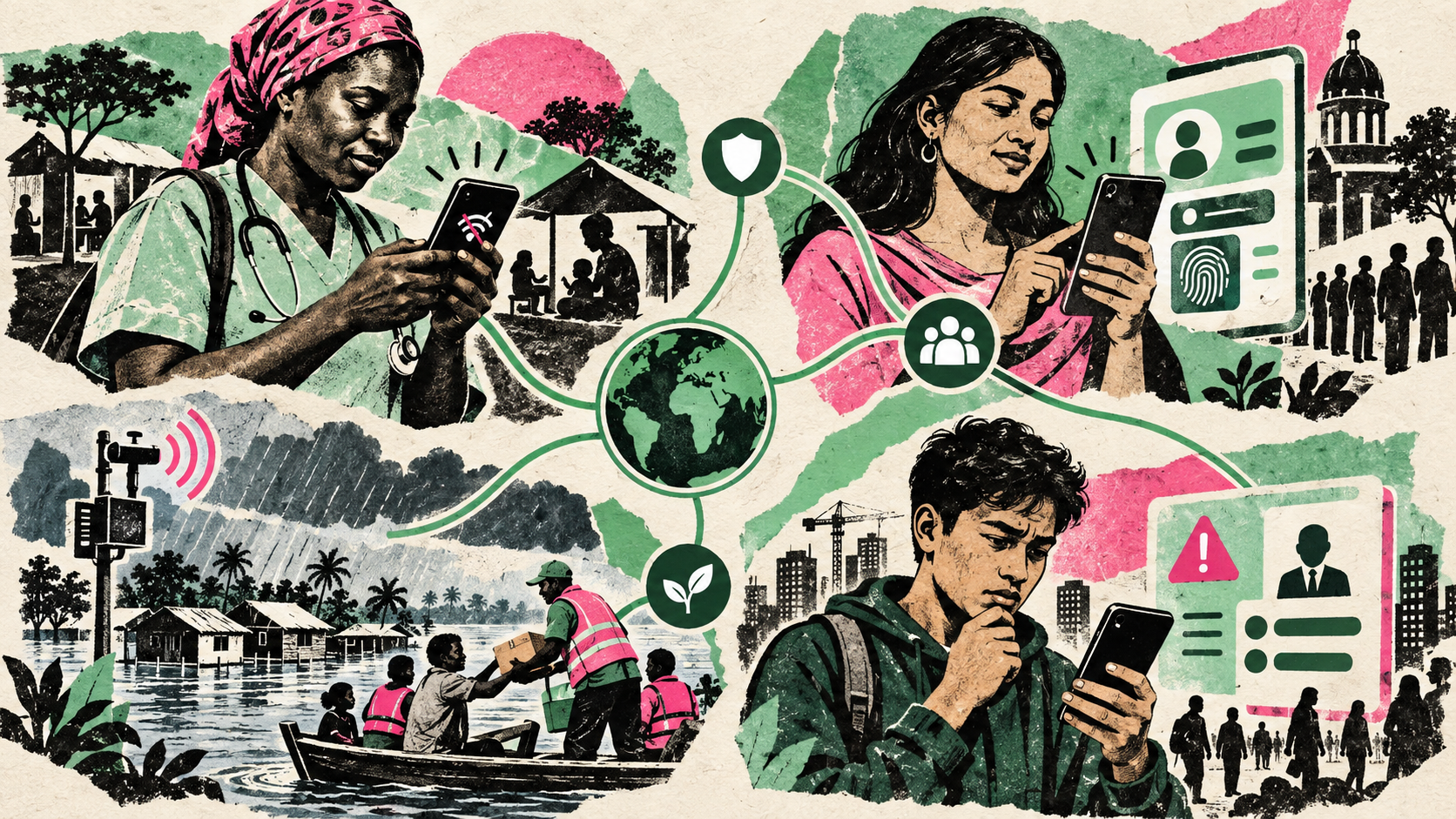
Medic's Community Health Toolkit runs on low-cost Android phones and supports offline work. For an NGO, that means identifying the smallest task that must continue without connectivity, storing only the data needed locally, showing users what has and has not synchronised, and testing recovery after interrupted uploads.
Pattern two: meet users in familiar channels
Mexico's Ramona AI lets jobseekers forward suspicious offers through WhatsApp or Telegram rather than requiring a new application. Before adopting that pattern, check who is excluded from the chosen channel, what metadata the platform receives, how consent works and where a person reaches qualified human help when the automated assessment is uncertain.
Pattern three: agree triggers before a crisis
Nepal-based Rahat links flood forecasts to alerts and pre-positioned assistance. Organisations considering anticipatory action should agree thresholds, eligible groups, payment routes, human override and audit records before the emergency. Test false alarms and missed triggers as seriously as successful activation.
Pattern four: plan for institutional ownership
Ukraine's Diia and the Community Health Toolkit show that scale depends on public institutions, operating budgets and integration with existing services. Ask which organisation owns the service, data and support obligation after a pilot; whether local teams can configure it; and what happens if a funder or supplier exits.
Use the patterns, verify the claims
The awards organiser reports substantial reach for the projects, but its public summary does not publish detailed scoring, independent verification methods or comparable outcome data. Treat the examples as design hypotheses. Validate them with users, programme evidence, security review and total-cost analysis before procurement or replication.