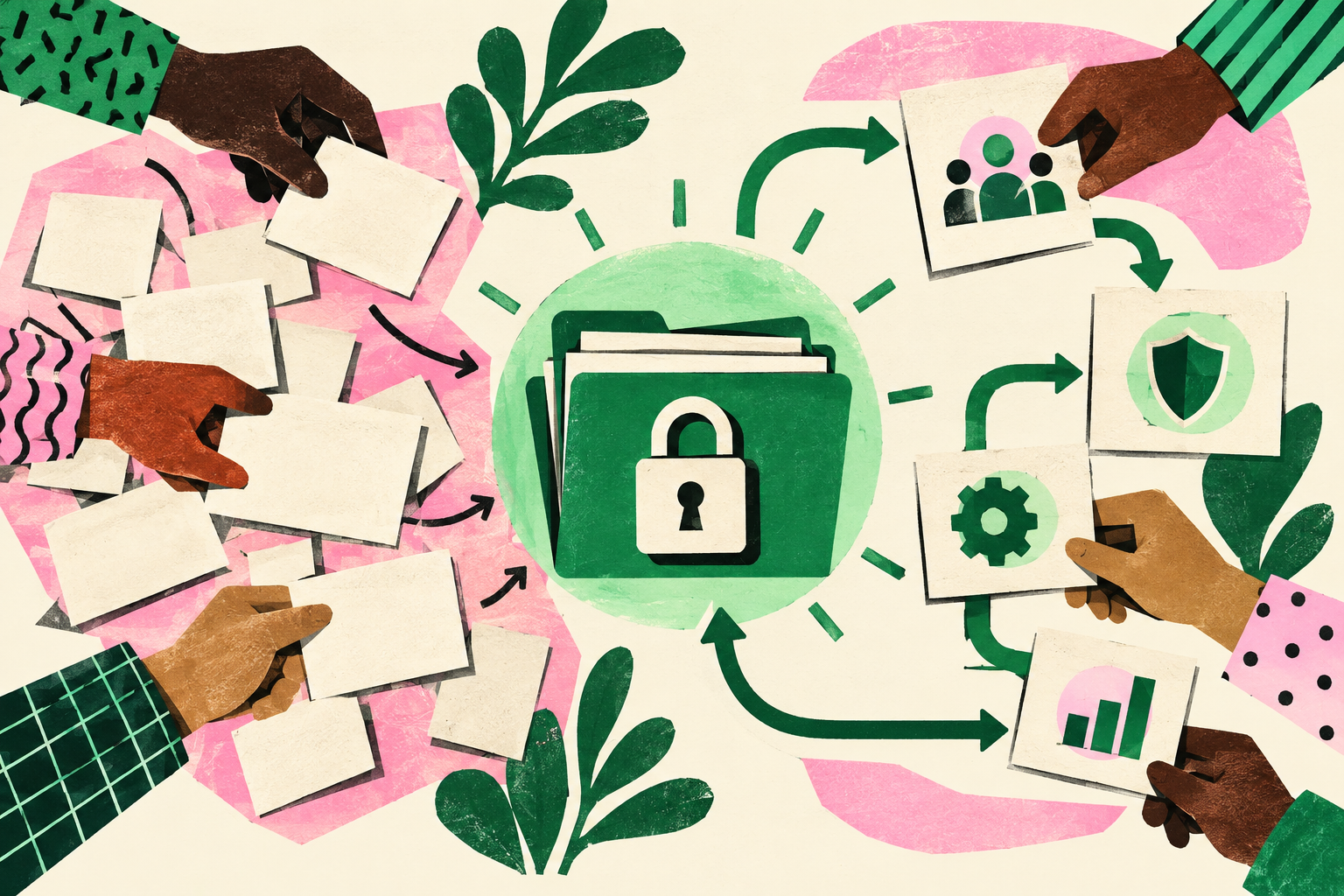
World Vision International has launched a Responsible Data Maturity Assessment for humanitarian organisations. The CALP Network's 29 September showcase says the free tool is available in English and Arabic, can be completed online by an individual or team, and can also be downloaded as a PDF. National actors and partner teams in Sudan were central to its design.
Run it as a team, not a solo survey
Include someone from programme delivery or cash assistance, monitoring and evaluation, safeguarding, information management, IT or security, and a national partner that handles data in practice. Different roles see different parts of collection, access, sharing and deletion. Record disagreements instead of averaging them away: a disputed score often exposes the process that needs attention.
Bring evidence to every answer
Use a current data inventory, sample data-sharing agreements, access lists, retention schedules, incident procedures and recent training records. For each answer, note the document, system setting or observed practice that supports it. A policy that staff cannot find or apply should not receive the same score as a control that is operating and periodically checked.
Protect information during the assessment
Do not enter names of affected people, live case details, passwords, precise vulnerabilities or other sensitive operational information. Before using the online version, check what responses it collects, where they are stored, who can access them and when they are deleted. Use the downloadable PDF or another controlled offline process if those answers are unclear.
Turn the result into a 30-day plan
Choose no more than three gaps with the highest potential harm and a realistic near-term fix. Give each action an owner, due date and evidence of completion. One team might document a deletion schedule, remove dormant accounts and test an incident contact tree; another might first map which partners receive recipient data and why.
Keep the score in its proper place
The launch page says the assessment produces an analysis of current maturity, the next stage and concrete steps. It does not publish the full scoring method, validation evidence, privacy terms or independently evaluated outcomes. Use the result as a structured conversation and roadmap, not as a compliance certificate, a security audit or proof that a partner is eligible for funding.
Let partners define what improvement means
Because organisations in Sudan helped shape the tool, teams elsewhere should preserve that participatory approach. Check whether the Arabic and English wording matches local practice, whether staff can challenge a question, and whether connectivity or power dynamics distort the discussion. Funders should support corrective work rather than use a low score to penalise the organisation that identified the gap.