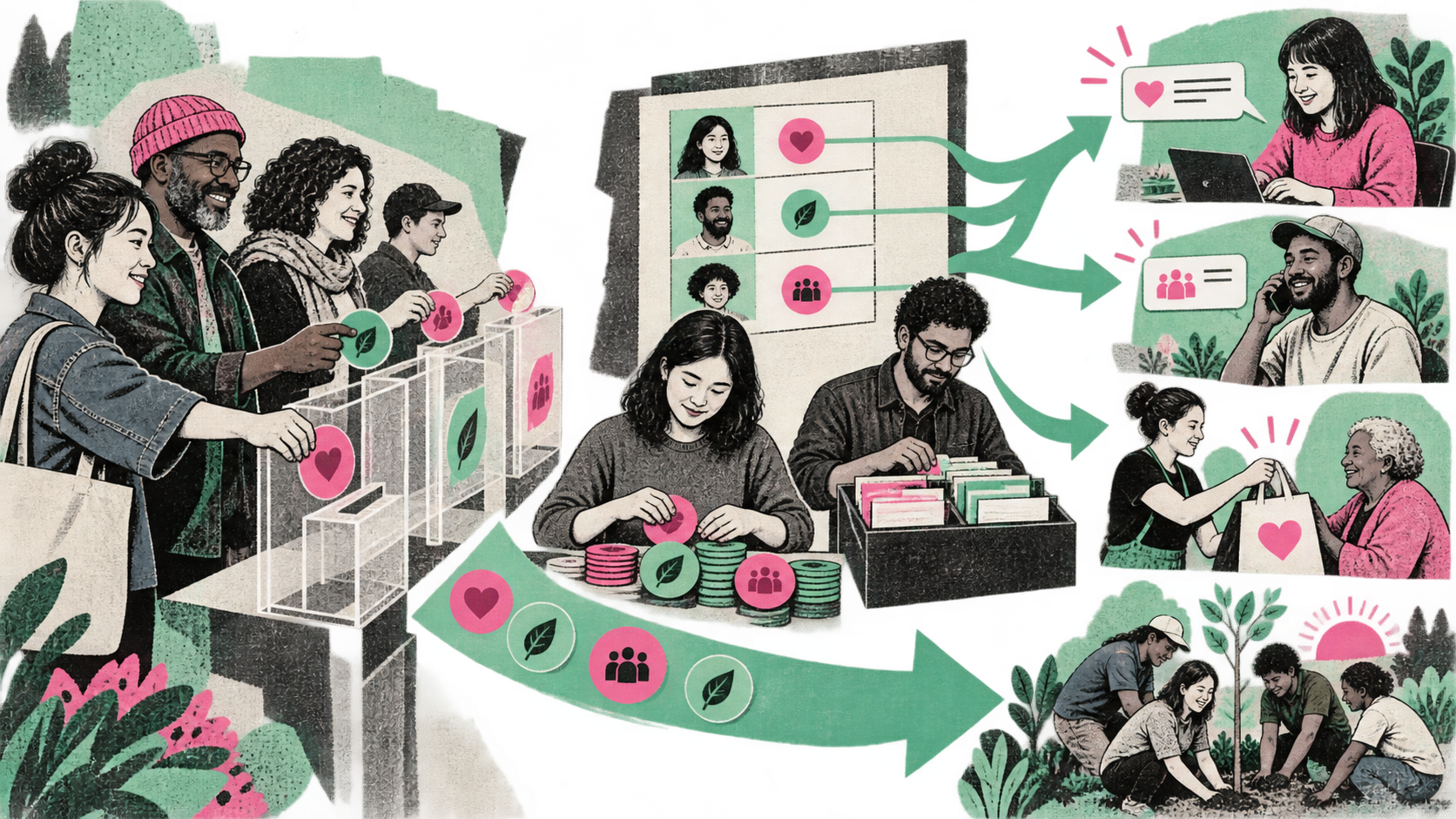
Adoveo's proposition—linking engagement, communications and fundraising through first-party data—addresses a real nonprofit problem. But connecting every interaction to the CRM can create duplicates, ambiguous consent and unusable records unless the organisation decides what deserves to move.
Begin with decisions, not available fields
List the actions staff should take: welcome a new advocate, suppress a recent donor, invite an event participant or hand a qualified relationship to a fundraiser. Collect and transfer only the data needed for those decisions and legal obligations.
Define identity and consent
Choose matching rules for email, phone, supporter ID and households. Document how conflicting records are reviewed. Store when, where and why permission was collected, which channel it covers and how withdrawal propagates to every connected system.
Assign ownership at every boundary
Name who owns forms, field definitions, integrations, failed synchronisation, access reviews and deletion. Monitor rejected records and silent changes after product releases. A connector running without errors does not prove the data is correct.
Measure whether data creates useful work
Track duplicate rate, consent completeness, time from action to follow-up, records requiring repair and campaigns improved by the data. Delete fields no one can explain or use. More first-party data is not a success measure by itself.